★★★★★
I received excellent care and guidance throughout my ACL and meniscus surgery journey. From the preparation phase to the recovery process, I felt fully supported with a clear plan and weekly progression.
We have experience supporting sports teams at the highest level. We help map out injury risks, run screenings and build strength training programmes. Working closely with trainers and coaches is the key to it.
The collaboration between the coaching staff and the physiotherapist is essential. We create that connection and stay in close contact with trainers about how fit their athletes are. What we deliver depends on the sport and on what a team is looking for.
To map out what a team needs, we start with a conversation to see whether we are a match. After that we get to work and build a plan for the season ahead. During the season we evaluate progress several times and adjust wherever there is room to improve. It is always a learning process for us too.
Professional middle-distance team. We provide the physiotherapy care for all individual athletes at the practice. One of our colleagues also joins the team on training camp each year, to prepare athletes for the competition season. One of our physiotherapists also writes the strength training periodisation for the team.
We are the club physiotherapists in Amsterdam-Noord. Players with complaints are seen quickly, at a walk-in clinic set up for exactly that. It gives the club easy access to care for medical complaints. If someone genuinely needs rehabilitation, they come to us at the practice.
We worked intensively with Team Novus for three years. Jurre was the team's medical coordinator and physiotherapist, travelling with them to training camps and competitions around the world. The project ended after the last Olympic cycle, and we still use what those years taught us every day. Read more about Jurre.
At the start of the season the full squad goes through the same screening: strength, mobility, control and load capacity. You get a report per athlete and a picture of the team as a whole, so you know where the weak spots are before they turn into complaints.
A warm-up and strength protocol your own staff run. We set it up, teach it and adjust it through the season based on the measurements. That way the programme belongs to the team, including on the days we are not there.
If you would rather not run it yourself, we take the team sessions in the gym. At one of our locations or at the club, depending on the schedule and how the training week is built.
A dedicated physiotherapist for the team. Athletes with complaints are seen quickly, and the decision about when someone returns to full training is made on criteria: strength, control and being pain-free, not on the number of weeks since the injury.
Present on match days, at tournaments and on training camps. For the warm-up, for complaints that come up during the day and for recovery afterwards.
Workshops for coaches and trainers on load, recovery and progression. The aim is that your staff can see for themselves when an athlete is pushing too hard, and know what to do about it.
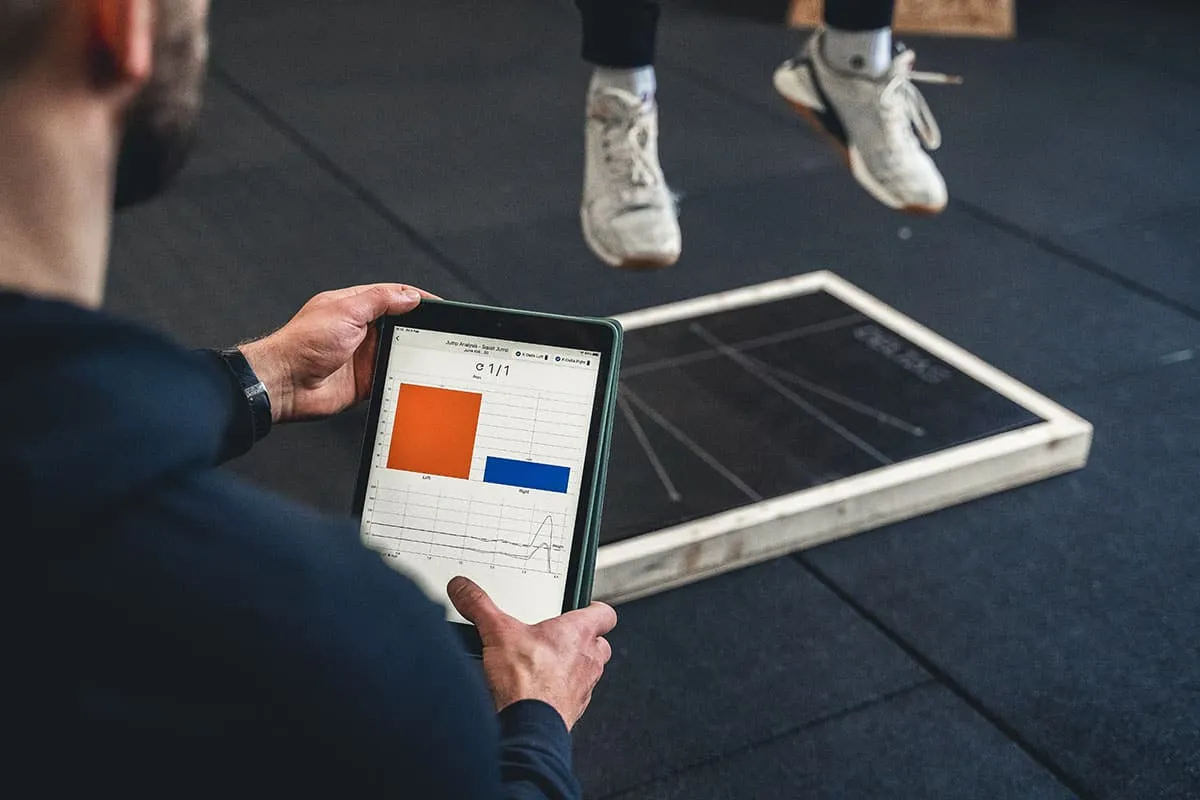
A baseline measurement at the start of the season says little if you never repeat it. We measure again after pre-season, halfway through and at the end. That way you can see whether the strength work is actually doing something and which athletes are falling behind, instead of reading it off the injury count at the end of the season.
We use the same numbers for the return after an injury. If the strength difference between left and right is still 25 per cent, an athlete is not ready, even if it feels fine and there is an important match coming up. We would rather have that conversation with a coach holding a measurement than a hunch.
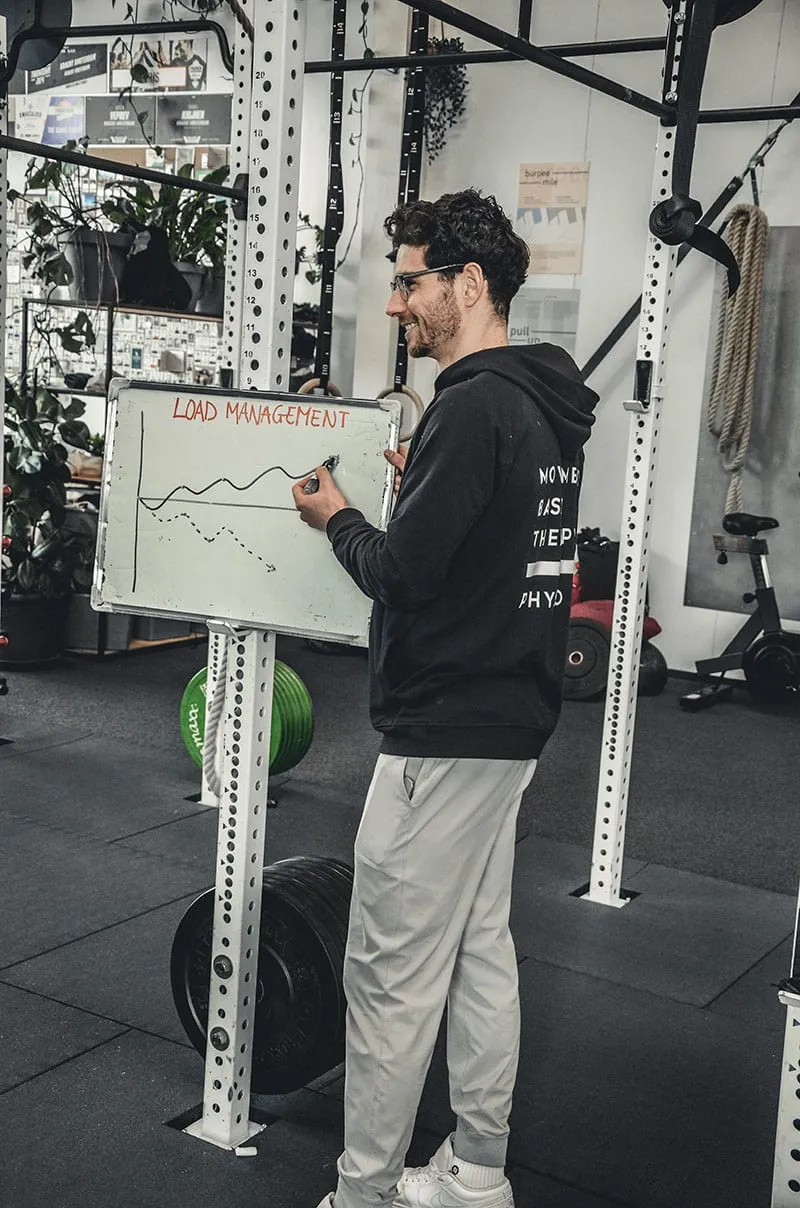
Every treatment starts with a thorough intake. This gives us a complete picture of your physical health, movement patterns and mental well-being. We take a holistic approach and look beyond physical symptoms alone. Think sleep habits, nutrition, hydration, movement and daily stress factors.
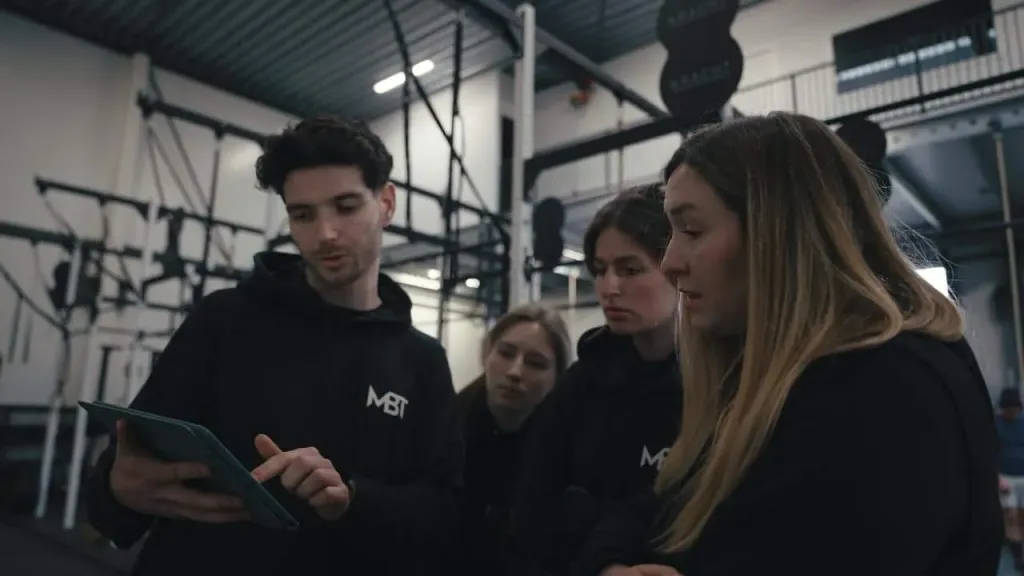
Understanding your condition is the key to lasting recovery. We make sure you understand where your symptoms come from and how to manage them. This helps you recognise your body's signals and prevent future issues.
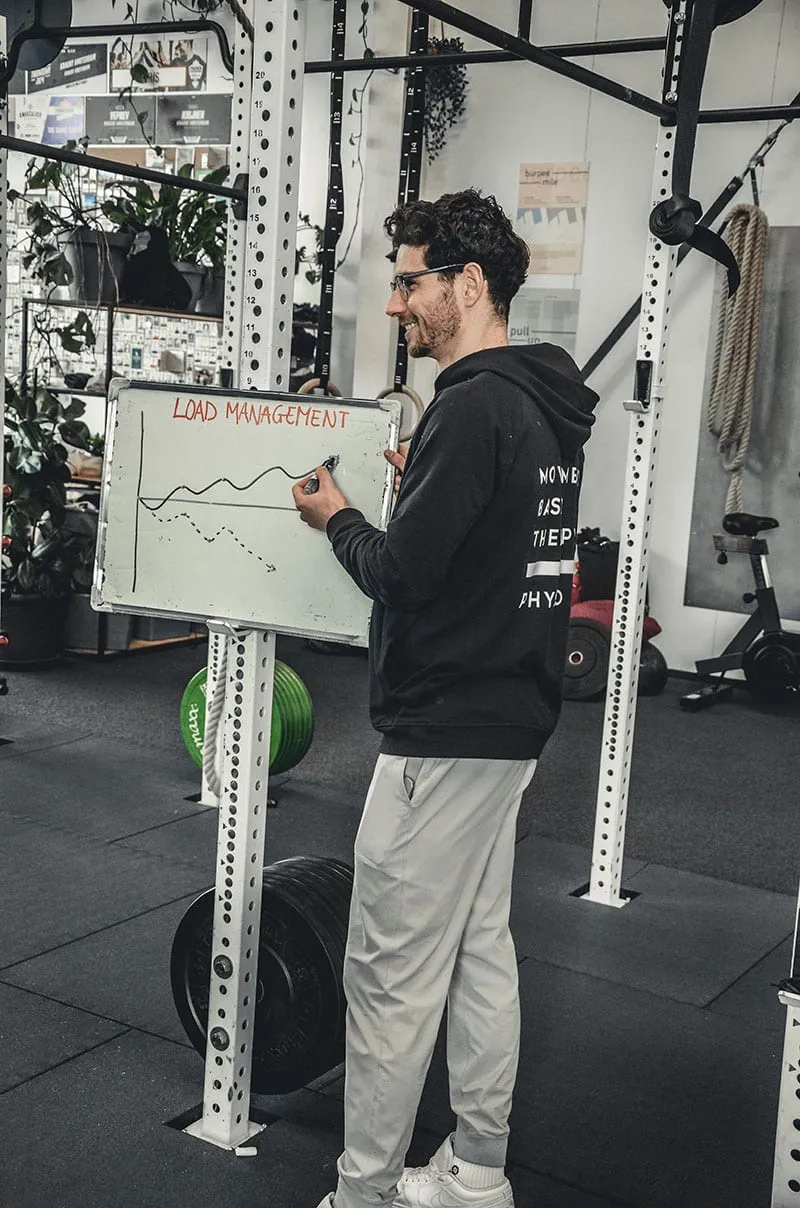
We work through a tailored programme that targets weaknesses in the body. Movement is at the centre of our treatment method. With specific exercises tuned to you, we build your body's capacity to handle load and help you develop sustainable movement habits. This reduces the chance of recurring symptoms.
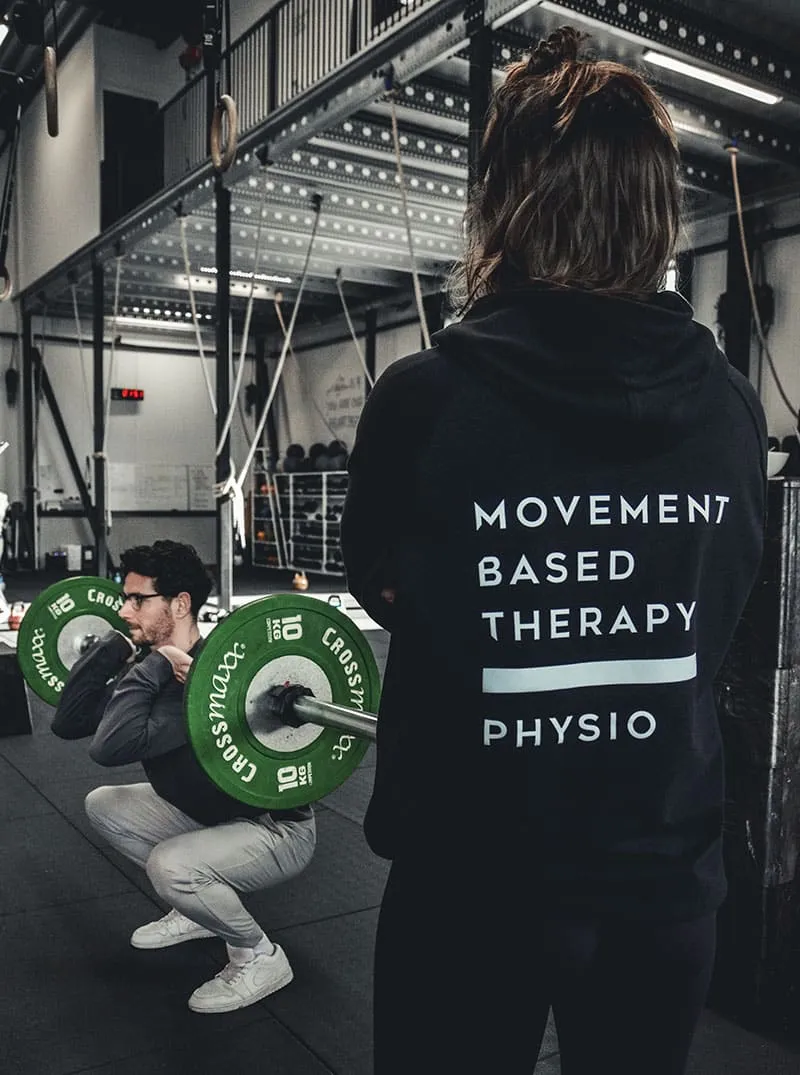
Evaluation is an essential part of our approach. We monitor your progress regularly and adjust the treatment plan when needed. This keeps the therapy aligned with your goals and needs at every stage of the process.
Both happen. Screening and strength training usually take place at one of our locations, because that is where the measuring equipment is. Prevention programmes, workshops and match day support happen at the club.
That depends on the size of the squad and what you take. We put together a proposal after an introductory meeting. Team support falls outside reimbursed physiotherapy. Treatment of an individual athlete with a complaint can go through their own health insurance.
Yes. With an amateur squad the emphasis often falls differently than with a professional team: fewer training hours, a wider range of levels within the group and a staff doing it alongside a job. The programme adapts to that.
Yes. Athletes from the teams we work with come to us for physiotherapy, rehabilitation after surgery or personal training. That runs through the normal route and needs no referral.
Preferably before pre-season, so the baseline measurement is in place before the load goes up. Joining halfway through the season also works. In that case we start with the athletes who have complaints at that moment and build the programme around them.
A full squad is no problem. We usually plan a screening for a team of 20 to 25 athletes across two half-days, so there is enough time per athlete to take the measurements reliably.
Tell us briefly what kind of team it is and what is going on this season. We will arrange an introduction at one of our locations or at the club.
I received excellent care and guidance throughout my ACL and meniscus surgery journey. From the preparation phase to the recovery process, I felt fully supported with a clear plan and weekly progression.
Cedrine helped me enormously with my recovery from recurring knee complaints. Within a few months the strength difference between both legs was minimal.
I've been helped tremendously by multiple members of the team for various issues over the course of about a year now. Not all team members have been my PT, but I have met them all and they are all great.